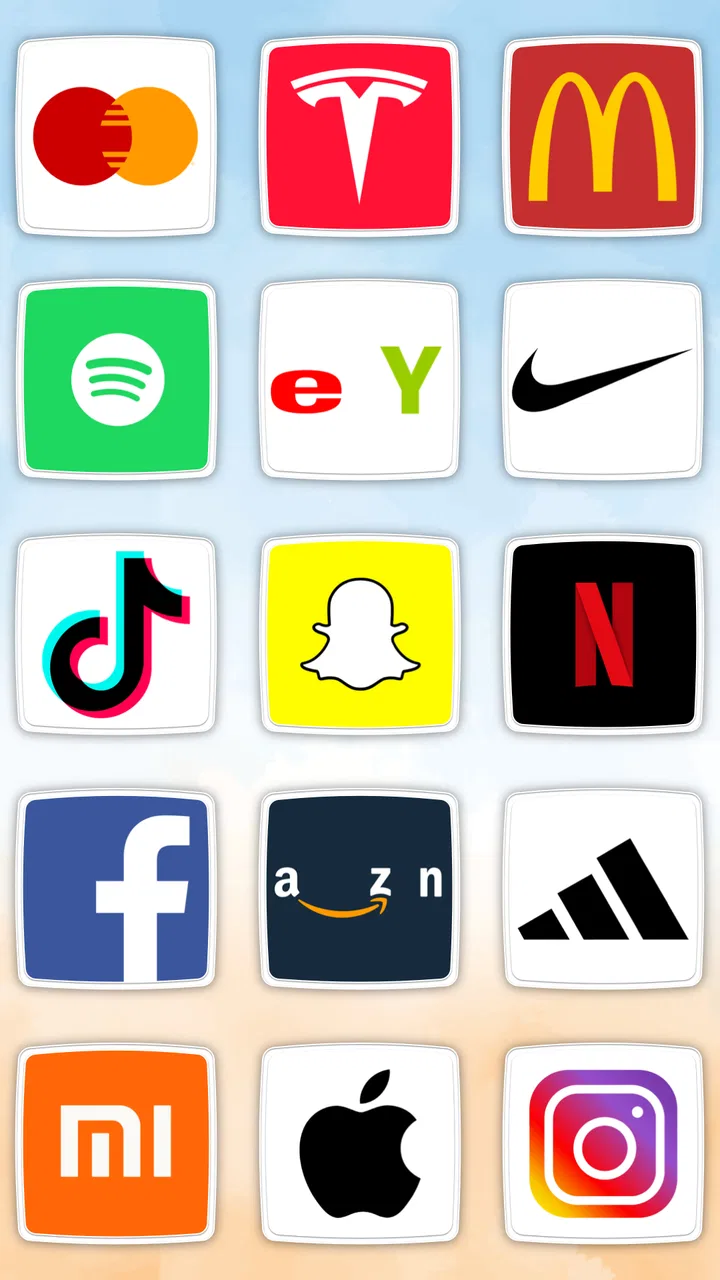
LogoMania: Quiz Trivia Game
- 4.7
- Rating
- 5.00M
- Installs
- Free
- Price

 Analysis by App-foxy
I like trivia games that are easy to understand within a few seconds but still give me a reason to return later. LogoMania: Quiz Trivia Game fits that description closely: it presents brand logos and asks me to identify them, turning familiar visual symbols into short recognition challenges. It is a free game in the trivia category, developed by Playmania LTD, and its broad appeal is easy to understand because the basic activity needs no complicated rules or long tutorial.
My first impression was that this is best treated as a quick mental break rather than a deep knowledge game. I can open it when I have a spare moment, answer a few logo questions, and stop without needing to remember a complex story or manage a large collection of characters. That simplicity is also the main reason I would recommend it to people who enjoy casual quizzes, family-friendly challenges, or friendly competition based on everyday knowledge.
How the logo quiz feels in everyday use
The normal workflow is pleasantly direct. I launch the game, look at the logo, and try to identify the company or brand before committing to an answer. The challenge is not always about knowing a business name perfectly; it can also involve recognizing a color combination, a shape, a partial symbol, or the visual style associated with a familiar product. That makes each question feel like a small exercise in observation as well as memory.
You May Also Like

 Blood Strike: 2.5 Anniversary
Blood Strike’s Loadouts Turn Every Drop Into a Tactical Gamble
A close look at Blood Strike’s custom loadouts: how fast access to signature weapons reshapes its battle royale rhythm, rewards preparation, and narrows the gap between fights.

 Pandora - Music & Podcasts
Pandora’s Music Is Easy to Start, but Harder to Recover
Pandora’s strength is its low-effort path from a seed to a station. Its weak spot is how much confidence it asks you to place in connection, setup, and quiet recovery.

 8 Ball Pool
 Is Built on Rivalries, Rematches, and Routine
A close look at the rivalries, rematches, shared routines, and unanswered safety questions that turn a quick pool match into a persistent mobile community.

 Samsung Music
’s Quiet Strength Is Playing What You Already Own
Its reach comes less from spectacle than from dependable access to a personal library. That simplicity is both the app’s strongest retention engine and its ceiling.

 AccuWeather: Weather Radar
AccuWeather Review: A Quick, Clear Forecast for Everyday Decisions
For everyday plans, the best forecast is the one you can understand quickly. AccuWeather makes rain timing, radar, and local conditions easy to act on, with a few trade-offs.

 Hill Climb Racing
Why Hill Climb Racing Still Turns Crashes Into One More Run
A tiny car, a bumpy hill and one more upgrade: Hill Climb Racing keeps resurfacing because its simple chaos makes every near-miss feel personal.
More From Our News Desk



I found the strongest use case during short waiting periods. For example, if I am waiting for a friend at a café, I can play a few rounds without setting aside a full evening. It also works well as a casual conversation starter: one person can attempt a logo, another can suggest an answer, and the group can compare which brands were immediately recognizable. Because the content rating is Everyone, it is suitable for a broad audience, although younger players may still need help with brands they have not encountered in daily life.
The game’s free entry point matters here. I can try it without paying first, which makes the decision simple for someone who is unsure whether logo trivia will hold their attention. There are in-app purchases ranging from $0.99 to $49.99 per item, so I would approach optional spending carefully rather than assuming every player will want it. The free starting point is enough to judge whether the question style and pacing suit me.
Its popularity also gives me some confidence that the basic idea has found an audience. The game has passed 5 million installs and holds a 4.7 average from around 105 thousand ratings, with roughly 2.8 thousand written reviews. I would not treat those figures as a guarantee that every question will match my interests, but they do suggest that the format is accessible to many casual players.
What I look for before answering
My most useful habit is to separate recognition from guessing. First, I look at the overall outline and dominant colors. Then I check whether the visible mark resembles a product category, a service I use, or a brand commonly seen in shops and advertising. Only after that do I think about the exact name. This prevents me from locking onto the first vague association that comes to mind.
When a logo seems familiar but the name does not arrive, I mentally list related possibilities instead of staring at it passively. A symbol might belong to a clothing company, a food brand, a technology service, or a vehicle maker. Narrowing the category first makes the memory search more manageable. This approach is especially useful when the logo is shown without the company name or when the design has been simplified.
I also avoid treating a wrong answer as wasted time. A missed logo often reveals a gap in my everyday visual vocabulary. If I encounter the same brand later, I am more likely to recognize it because I have already connected the symbol with the name. That makes repeat play more valuable than simply chasing a perfect run once.
Settings and small habits worth checking
Before settling into regular play, I would inspect the available settings and interface options rather than assuming the default arrangement is ideal. The exact choices can affect how comfortable the game feels during longer sessions, particularly if I prefer quieter play or need a larger, clearer presentation. I do not change settings just for the sake of it; I look for anything that reduces distraction and keeps attention on the logo itself.
A practical routine is to play with a clear goal. I might use one session to answer quickly, another to focus on accuracy, and a third to revisit logos that caused hesitation. This turns a simple quiz into a repeatable learning loop. The game does not need to become a formal study tool for that method to work; the value comes from noticing patterns in my own mistakes.
I also recommend checking the purchase flow before tapping any prominent option. Since the game is free but includes paid items, I would make sure I understand when a selection leads toward an in-app purchase. That is particularly sensible on a shared device used by children. The game’s Everyone rating makes it approachable for families, but age suitability and spending awareness are separate questions.
Another useful adjustment is choosing the right session length for the situation. A short burst keeps the experience light, while a longer session can expose repetition and make familiar visual styles blend together. When I feel that happening, I stop rather than forcing more answers. Returning later usually makes recognition sharper than continuing while distracted.
How experienced players become faster
Speed comes less from rushing and more from using the same inspection order every time. I start with the silhouette, move to color, check for letters or distinctive shapes, and then connect the image with a brand category. This sequence gives my attention a structure. Without it, I tend to bounce between random guesses and lose the most useful visual clues.
Another effective pattern is to distinguish a logo’s core identity from decorative details. Some designs are recognizable because of one particular mark, while other details may be altered or absent in the quiz image. I focus on the element that would remain memorable at a glance. This is a better strategy than trying to reproduce the entire logo mentally.
I would also avoid spending too long on one uncertain answer. A quick, reasoned decision is usually more useful than repeatedly changing my mind. If the game offers a way to move forward, I treat difficult questions as information for later rather than allowing one unfamiliar brand to slow the whole session. The trade-off is that I may miss an answer, but I preserve the relaxed rhythm that makes this game appealing.
For group play, I like giving everyone a few seconds of silent observation before allowing suggestions. Otherwise, the fastest guesser dominates and the quiz becomes a test of who speaks first. Taking turns also reveals different kinds of knowledge: one person may know fashion brands, another may recognize technology logos, and someone else may be better with food or travel-related companies. That variety makes the game more engaging than playing alone every time.
Where the format works best—and where it does not
The game is a good match for people who enjoy visual recall, general brand awareness, and compact trivia sessions. It is also a comfortable choice for families because the premise is easy to explain and the age rating is Everyone. I can imagine using it as a low-pressure quiz during a break, a casual challenge with friends, or a way to fill a few minutes without committing to a larger game.
It is less suitable for someone seeking a detailed trivia system with long explanations, subject-specific learning, or a strong narrative. A logo quiz tests recognition, not necessarily understanding. Knowing a symbol does not mean I know the company’s history, products, or industry, and the game should not be judged as though it were a reference guide.
Players who dislike commercial branding may also lose interest more quickly. The central appeal depends on finding brands familiar or satisfying to identify. Someone who prefers geography, science, history, word puzzles, or general knowledge questions may get more variety from a traditional trivia app. In that comparison, LogoMania is narrower but more immediately visual.
Compared with a standard quiz game, the advantage here is the low barrier to entry. I do not need to read a long question or interpret several possible meanings before starting. Compared with a pure puzzle game, the challenge is more dependent on personal experience and cultural exposure. That creates an important trade-off: a logo that is obvious to one player may be completely unfamiliar to another, so difficulty can feel uneven rather than purely logical.
Limitations that affect the long-term experience
The same focused concept that makes the game approachable can limit its variety. If I play for too long in one sitting, the activity may begin to feel repetitive because the central action remains identifying brands. I would not choose it as my only mobile game. It works better in rotation with other genres, especially when I want something lighter than a strategy game or less demanding than a long-form quiz.
Difficulty can also depend heavily on background. A player’s country, age, shopping habits, interests, and exposure to advertising all shape which logos feel familiar. That means a difficult question is not always a sign of advanced reasoning; sometimes it simply reflects a brand I have never encountered. I appreciate the challenge, but I would avoid comparing scores too seriously between people with very different experiences.
Optional purchases are another point to consider. The game costs nothing to start, but the listed per-item purchase range reaches from $0.99 to $49.99. I would keep spending limited to a deliberate choice, not an impulse caused by frustration with a difficult logo. For families, I would combine the game’s accessible age rating with sensible device-level purchase controls.
The current version is 3.6.0.3, and the game supports devices running Android 5.0 or later. That makes it available to many older Android devices, which is helpful if I am installing it on a spare phone or a family tablet. At the same time, older hardware can vary in responsiveness, so I would keep expectations realistic if the device is no longer quick with modern apps.
A practical routine for getting more from it
My preferred routine is simple: begin with a short session, answer the obvious logos without overthinking, and treat uncertain images as a chance to improve recognition. Afterward, I think about the type of clue that helped or failed me. Was it the color, the shape, the letter pattern, or the industry association? That reflection is more useful than merely remembering whether the answer was right.
For a family or friend group, I would create informal categories during play. One round can focus on speed, another on explaining why an image looks familiar, and another on allowing a second person to give a clue. These variations do not require inventing new game modes; they simply change how we interact with the same quiz. The result is a more social experience without pretending the app is a full multiplayer platform.
I also recommend stopping at the first clear sign of fatigue. Logo recognition depends on attention, and tired players tend to confuse similar shapes or guess based on color alone. A short break protects the enjoyable part of the experience. When I return later, the quiz feels fresher and I can tell whether I am genuinely learning the visual patterns or just reacting automatically.
My verdict after using the game
LogoMania: Quiz Trivia Game is a focused, approachable choice for anyone who likes identifying brands and wants trivia that can be played in small pieces. I enjoy its immediate premise, its family-friendly positioning, and the fact that I can begin for free. The strongest experience comes from using a consistent visual inspection method and keeping sessions short enough that recognition remains fun.
I would recommend it to casual quiz fans, families, and players who enjoy testing everyday visual memory. I would skip it if I wanted deep explanations, a broad range of academic subjects, or a substantial story-driven game. Its narrow theme is both its identity and its main limitation.
For me, the final decision is straightforward: it is worth trying when a quick brand-recognition challenge sounds appealing, especially because the entry cost is free. I would keep purchases intentional, compare scores casually rather than competitively, and use the game as one enjoyable part of a wider mobile routine. The best way to play is not to rush every logo, but to build a repeatable habit of observing, narrowing the category, and answering with confidence.
FAQs for LogoMania: Quiz Trivia Game
01What is LogoMania: Quiz Trivia Game about?
LogoMania: Quiz Trivia Game is a fun and engaging trivia game that challenges players to identify logos from various brands around the world. With thousands of logos spanning different categories, it tests your brand knowledge and offers a mix of difficulty levels to keep players entertained and challenged.
02Is LogoMania: Quiz Trivia Game free to play?
Yes, LogoMania: Quiz Trivia Game is free to download and play. However, it does offer in-app purchases for hints and additional features. These purchases are optional and designed to enhance the gaming experience for those who wish to progress faster or need extra help.
03Can I play LogoMania: Quiz Trivia Game offline?
LogoMania: Quiz Trivia Game can be played offline, allowing users to enjoy the game without an internet connection. However, certain features such as leaderboard updates, social sharing, and in-app purchases will require an internet connection to function properly.
04What platforms is LogoMania: Quiz Trivia Game available on?
LogoMania: Quiz Trivia Game is available on both Android and iOS platforms. It can be downloaded from the Google Play Store for Android devices and the Apple App Store for iOS devices. Make sure your device meets the app's system requirements for optimal performance.
05How does LogoMania handle user data and privacy?
LogoMania takes user privacy seriously and adheres to strict data protection regulations. The game collects minimal user data, primarily for improving gameplay experience and ensuring smooth operation. Users can review the app’s privacy policy for detailed information on data handling practices.
Pros
- Intuitive user interface enhances gameplay.
- Wide variety of logos keeps it engaging.
- Offline mode available for on-the-go play.
- Regular updates with new content.
- Encourages learning of brand history.
Cons
- Contains frequent ads that interrupt play.
- Limited hints can frustrate new players.
- Some logos are region-specific.
- In-app purchases can be costly.
- No multiplayer mode for group play.

LogoMania: Quiz Trivia Game
Gallery